

 Austin Passamonte Package ( Discount 25 % )
 Carlos Usabiaga Ibanez – The Current State of Macroeconomics
 Carlos M.Pelaez – The Global Recession Risk
 Christodoulos Floudas, Panos Pardalos – Encyclopedia of Optimization 2nd Ed
 Alpesh Patel Package ( Discount 20% )
 Grant Noble - The Trader's Edge
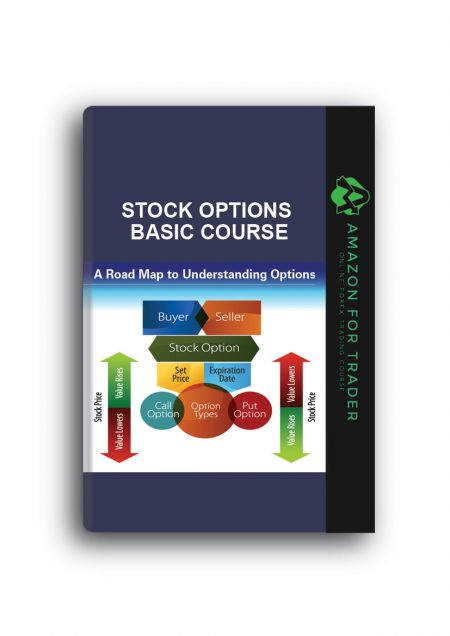 STOCK OPTIONS BASICS COURSE - Follow Me Trades
 Cheng-Few Lee – Encyclopedia of Finance
 CashFlow Heaven – Trade from Anywhere (tradefromanywhere.com)
 J.D. Hamon - Advanced Commodity Trading Techniques
 Aspatore Books – Inside the Minds Leading Wall Street Investors
 David A.Strachman – Funds of Funds Investing
 Craig Harris – Forex Trading Advice & Intro to The Natural Flow (craigharris-forex-education.com)
 TRIFORCE TRAINING Part 2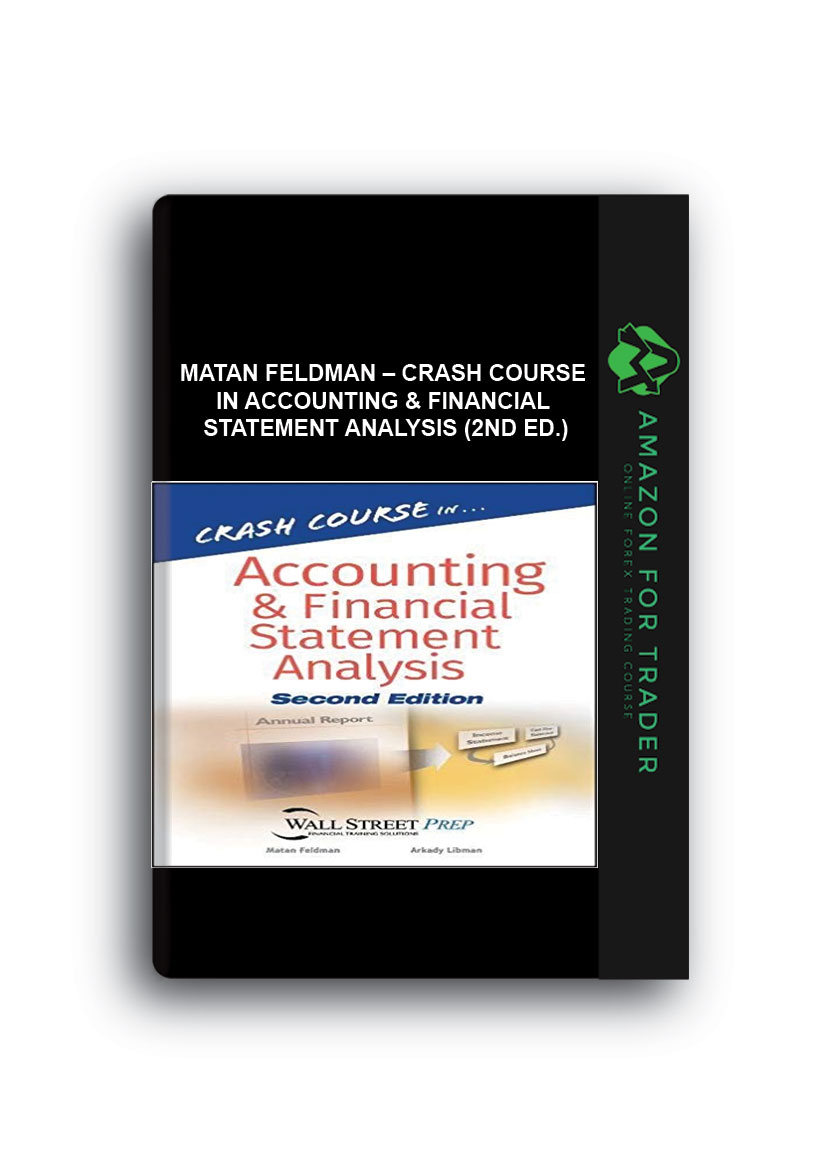
Description
Matan Feldman – Crash Course in Accounting & Financial Statement Analysis (2nd Ed.)
Description
Seamlessly bridging academic accounting with real-life applications, Crash Course in Accounting and Financial Statement Analysis, Second Edition is the perfect guide to a complete understanding of accounting and financial statement analysis for those with no prior accounting background and those who seek a refresher.
Table of Contents
About the Authors.
Preface.
Chapter 1 Introduction to Accounting.
What Is Accounting?
Why Is Accounting Important?
Making Corporate Decisions.
Making Investment Decisions.
Accounting Facilitates Corporate and Investment Decisions.
Who Uses Accounting?
U.S. Accounting Regulations.
Generally Accepted Accounting Principles.
Overview of the Securities and Exchange Commission.
Overview of the Financial Accounting Standards Board.
International Accounting Regulations.
Convergence of U.S. GAAP and IFRS.
Summary.
Chapter 2 Basic Accounting Principles.
Assumptions.
Assumption 1: Accounting Entity.
Assumption 2: Going Concern.
Assumption 3: Measurement and Units of Measure.
Assumption 4: Periodicity.
Wrap-up: Assumptions.
Principles.
Principle 1: Historical Cost.
Principles 2 and 3: Accrual Basis.
Principle 4: Full Disclosure.
Wrap-up: Principles.
Constraints.
Constraint 1: Estimates and Judgments.
Constraint 2: Materiality.
Constraint 3: Consistency.
Constraint 4: Conservatism.
Summary.
Chapter 3 Financial Reporting.
Financial Reporting Overview.
Finding Financial Reports.
Form 10-K (Annual Filing).
Why Is the 10-K Important?
Form 10-Q (Quarterly Filing).
Other Important Filings.
Form 8-K.
Form S-1.
Form 14A.
Form 20-F.
Summary.
Chapter 4 Reading the Annual Report.
Introduction.
Letter to Stockholders.
Financial Highlights.
Management’s Discussion and Analysis.
Financial Statements.
Income Statement.
Balance Sheet.
Cash Flow Statement.
Notes to Consolidated Statements.
Report of Management’s Responsibilities.
Certification of Financial Statements.
Risk Factors.
Legal Proceedings.
Report of Independent Auditors.
Directors and Officers.
Summary.
Chapter 5 Income Statement.
What is the Income Statement?
Why Is It Important?
Revenues.
Not All Income Is Revenue.
Bad Debt Expense.
What Is Bad Debt Expense?
Revenue Recognition: To Recognize and When?
Revenue Recognition: Long-Term Projects.
Expense Recognition and Accrual Basis of Accounting.
Basic Principles Revisited: Accrual Basis of Accounting and Matching Principle.
Putting It All Together: The Accrual Basis of Accounting.
Why Use Accrual Accounting?
Accrual versus Cash Accounting: What’s the Difference?
Revenue Manipulation.
Cost of Goods Sold.
COGS Do Not Include Administrative Costs.
Gross Profit.
Selling, General and Administrative.
Research and Development.
Stock Options Expense.
Depreciation Expense.
Depreciation Is a “Phantom” Noncash Expense.
Straight-Line Depreciation Method.
Accelerated Depreciation Methods.
Depreciation Methods Compared.
Amortization.
Amortization Is a “Noncash” Expense (Like Depreciation).
What Is the Difference between Depreciation and Amortization?
Summary.
Goodwill.
Goodwill Not Amortized after 2001.
Interest Expense.
Interest Income.
Other Nonoperating Income.
Income Tax Expense.
Equity Income in Affiliates.
Minority Interest.
Net Income.
Shares Outstanding.
Representation of Shares Outstanding in the Income Statement.
Common Dividends.
Preferred Dividends.
Earnings per Share.
Nonrecurring Items.
Unusual or Infrequent Items.
Discontinued Operations.
Extraordinary Items.
Accounting Changes.
Earnings before Interest, Taxes, Depreciation, and Amortization.
EBITDA: Popular Measure of a Company’s Financial Performance.
EBITDA Has Several Shortcomings.
EBIT.
Summary.
Chapter 6 Balance Sheet.
Introduction.
Assets Represent the Company’s Resources.
Liabilities and Shareholders’ Equity Represent the Company’s Sources of Funds (i.e., How It Pays for Assets).
Lemonade Stand and the Accounting Equation.
Balance Sheet.
Double-Entry Accounting.
Why Is Double-Entry Accounting Important?
Income Statement Revisited: Links to Balance Sheet.
Retained Earnings: The Link Between Balance Sheet and Income Statement.
Impact of Revenues on the Balance Sheet.
Impact of COGS on the Balance Sheet.
Impact of SG&A on the Balance Sheet.
Impact of Depreciation on the Balance Sheet.
Impact of Interest Expense on the Balance Sheet.
Impact of Tax Expense on the Balance Sheet.
Total Impact of the Year on the Balance Sheet.
Summary.
Order of Liquidity.
Current versus Noncurrent Assets.
Current versus Long-Term Liabilities.
Assets.
Inventories.
LIFO Reserve: The Link between FIFO and LIFO Inventory Methods.
Writing Down Inventories.
Deferred Taxes.
PP&E, Net of Depreciation.
Reconciliation of PP&E.
Fixed Asset Impairments.
Fixed Asset Retirement and Disposal.
Intercompany Investments.
Consolidation.
Intangible Assets.
Goodwill.
Summary: Intangible Assets and Goodwill.
Summary: Assets.
Liabilities.
Other Typical Current Liabilities.
Debt.
Short-Term Debt versus Long-Term Debt.
Capital Leases.
Operating Leases.
Deferred Taxes.
Summary: Deferred Taxes.
Pensions.
Defined Benefit Plan.
Minority Interest.
Summary: Liabilities.
Shareholders’ Equity.
Introduction.
Common Stock.
Additional Paid-In Capital.
Preferred Stock.
Treasury Stock.
Retained Earnings.
Summary: Shareholders’ Equity.
Summary.
Chapter 7 Cash Flow Statement.
Introduction.
Cash Flow Statement to the Rescue!
Cash Flow from Operations.
Overview.
Indirect Method.
Getting from Net Income to Cost from Operations.
Depreciation.
Working Capital.
Changes in Accounts Receivable.
Changes in Accounts Receivable and the Lemonade Stand.
Changes in Inventories.
Changes in Inventories and the Lemonade Stand.
Changes in Accounts Payable.
Accounts Payable and the Lemonade Stand.
Changes in Other Current Assets.
Changes in Other Current Liabilities.
Increases/Decreases in Deferred Taxes.
Summary: Cash Flow from Operations.
Cash Flow from Investing Activities.
Overview.
Components.
Cash Flow from Financing Activities.
Overview.
Components.
How the Cash Flow Is Linked to the Balance Sheet.
Summary.
Online Exercise.
Chapter 8 Financial Ratio Analysis.
Introduction.
What Is Financial Ratio Analysis?
Liquidity Ratios.
Current Ratio.
Quick (Acid) Test.
Current Cash Debt Coverage Ratio.
Profitability Ratios.
Gross Profit Margin.
Profit Margin on Sales.
Return on Assets.
Return on Equity.
Earnings per Share.
Price-to-Earnings Ratio.
Payout Ratio.
Activity Ratios.
Receivables Turnover.
Days Sales Outstanding.
Inventory Turnover.
Days Sales of Inventory.
Asset Turnover.
Coverage Ratios.
Debt to Total Assets.
Times Interest Earned.
Cash Debt Coverage Ratio.
Calculations.
Appendix.
Stock Options.
Stock Options Expensing.
Then . . . .
. . . and Now.
Debt.
How Are These Two Forms of Capital Raised?
Who Issues Debt?
Long-Term Debt.
Capital versus Operating Leases.
Direct Method.
Index.
Author Information
Matan Feldman is founder and CEO of Wall Street Prep, a provider of step-by-step self-study courses and customized university and corporate training seminars in financial accounting, corporate finance, financial modeling, valuation modeling, and M&A modeling. Before Wall Street Prep, he worked as an equity research associate at JPMorgan Chase & Co. and as a financial analyst in the M&A group at Chase Manhattan Bank. He received an MA in economics with honors from Boston University.
Arkady Libman is the Managing Director of Wall Street Prep. Before Wall Street Prep, he worked as an equity research associate at Friedman, Billings, Ramsey & Co., Inc., and as an investment banking analyst at JPMorgan Chase & Co. He completed coursework at the London School of Economics and graduated with honors from Bowdoin College with a BA in economics.
Established by investment bankers, Wall Street Prep is a global full-service financial training firm, providing self-study programs as well as instructor-led training and e-learning services to investment banks, financial institutions, Fortune 1000 companies, and academic institutions.
New to This Edition
- Solid foundation:This book is written by investment bankers and follows a clear, easy-to-follow style. It provides practical applications and real-world examples as well as exercises.
- New to this edition:More examples have been added, IFRS/GAAP discussion has been expanded, Income Statement and Balance Sheet as well as Cash Flow Statements exercises will have been increased.
Matan Feldman, Crash Course in Accounting & Financial Statement Analysis (2nd Ed.), Download Crash Course in Accounting & Financial Statement Analysis (2nd Ed.), Free Crash Course in Accounting & Financial Statement Analysis (2nd Ed.), Crash Course in Accounting & Financial Statement Analysis (2nd Ed.) Torrent, Crash Course in Accounting & Financial Statement Analysis (2nd Ed.) Review, Crash Course in Accounting & Financial Statement Analysis (2nd Ed.) Groupbuy.

Reviews
There are no reviews yet.