

 MTI - Art of Yen Course (Feb 2014)
 WEEKLY WIRES CLASS - SIMPLER TRADING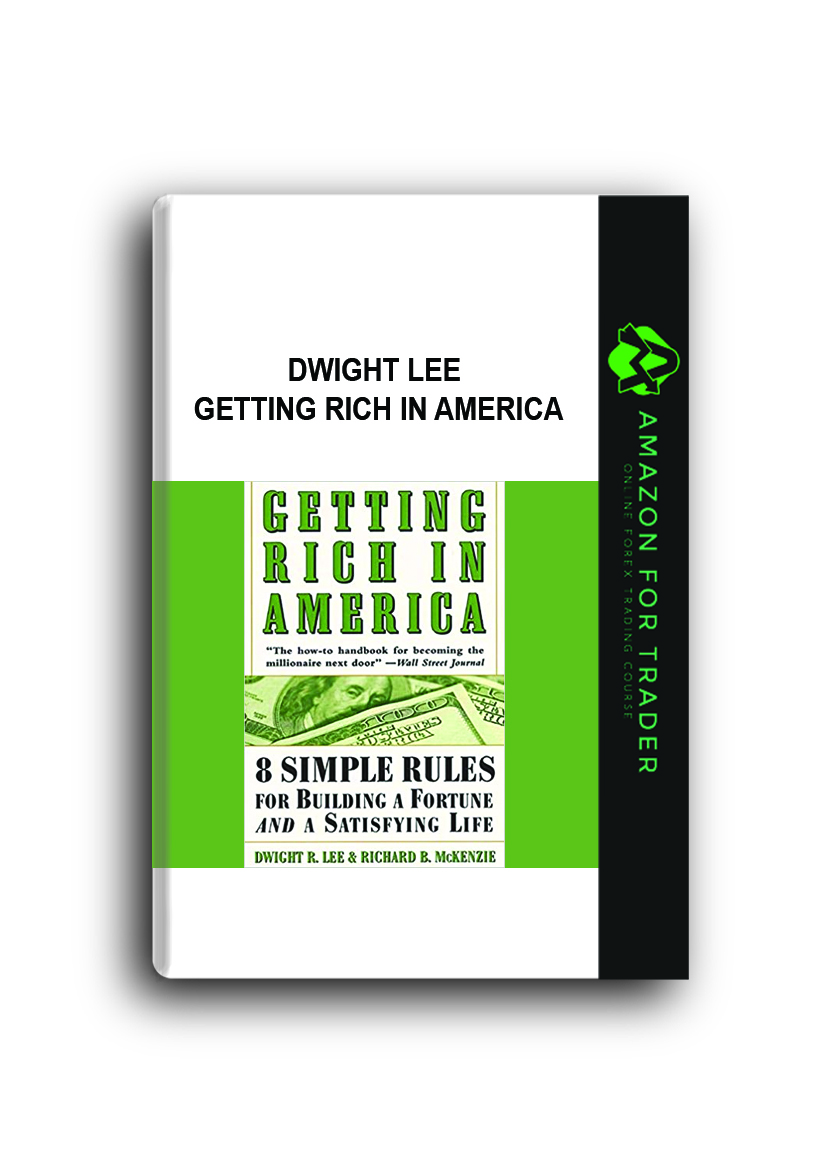
Description
Dwight Lee – Getting Rich in America
What you do on a daily basis may have a bearing on your riches in life. That’s according to Dwight Lee and Richard McKenzie, authors of Getting Rich in America: 8 Simple Rules For Building a Fortune and a Satisfying Life.
Don’t smoke or eat junk food (save the money instead), but do get married (singles spend too much trying to woo that special someone).
The eight rules: Think of America as the land of choices, take the power of compound interest seriously, resist temptation, get a good education, get and stay married, take care of yourself, take prudent risks and strive for balance.
The authors save their special admiration for the joys of compound interest. The way that even low-income and poor Americans can become rich, they say, is by saving and investing regularly, even a modest amount. But the trick is to be patient and allow your savings and investments to grow over the long haul. One chart shows what happens to the youthful (and wise) investor who saves $2,000 a year starting at age 22. At 65, you can expect to have $713,899 at an 8% return. If you are lucky enough to get a 15% return, that same investment would grow to $6.23 million by the time you are 65.
By way of background, both authors are professors — Lee at the College of Business at the University of Georgia, Athens, and McKenzie at the Graduate School of Management at the University of California, Irvine. McKenzie grew up in an orphanage in Piedmont, N.C., which led him to write a memoir called The Home: A Memoir of Growing Up in an Orphanage. One breakout in Getting Rich features one survey of orphans that shows how well they do in the world — attributed, in part, to a strong work ethic instilled at an early age.
The book also gives financial advice. For example, the authors say the best approach to investing in the stock market is to put most of your money in a mutual fund whose investment portfolio mirrors a broad-based market index, such as Standard & Poor’s 500-stock index, and to leave it there because the long-run return from index funds is higher than you can expect from almost any other investment.
If you have the time (and a calculator) to do the money exercises in the book, they are an excellent way to make you feel that you are taking charge of your future and finances. And if you are good at math, the calculations are entertaining.
One less obvious rule, strive for balance, means that successful people are principled with an admirable dose of determination to do what they set out to accomplish. This means living a life guided by constraints, rules and a vision of a prosperous and satisfying future.
Short of an inheritance or starting a successful business, the way to get rich is to save and safely invest as much money as possible at the youngest age. This strategy is perfect for someone who is just starting out. But even late bloomers are not totally lost. They may know more about where to find investments with higher rates of return. They may also be able to save more money than someone who’s younger.
Getting Rich has plenty of inspiring anecdotes about get-aheads. My favorite is about John Johnson, who founded Ebony and Jet magazines. In 1942, Johnson sought a loan to start a magazine but was turned down because of his race. Instead of getting mad, he asked a bank official who in town did make loans to blacks. After getting the name of a finance company, he asked the bank loan officer to be his reference.
The moral: Getting smart along with being persistent can make all the difference.
Dwight Lee, Getting Rich in America, Download Getting Rich in America, Free Getting Rich in America, Getting Rich in America Torrent, Getting Rich in America Review, Getting Rich in America Groupbuy.


Reviews
There are no reviews yet.