

 Tom Yeomans – Trading the News Seminar
 Carlos M.Pelaez – The Global Recession Risk
 Felix Homogratus - Secret Forex Society Economic Reports (2006-2007)
 Terry Townsend – Cotton Trading Manual
 Rementor - Multi Family Millions Live Event & Home Study Course
 George Fontanills & Tom Gentile - Futures and Commodities Home Study Course
 David A.Strachman – Funds of Funds Investing
 Jack Schwager – A Complete Guide to the Futures Markets
 J.L.Lord – One Strategy for all Markets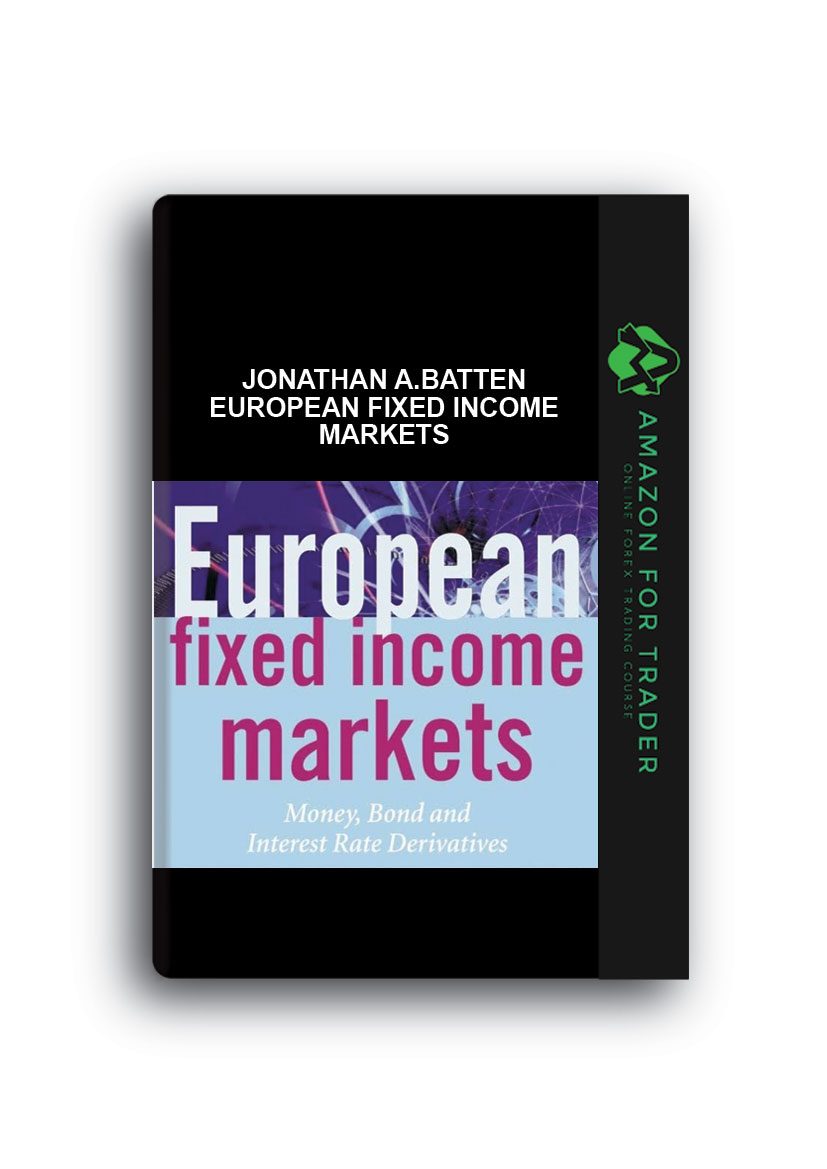
Description
Jonathan A.Batten – European Fixed Income Markets

Description
The introduction of the euro in 1999 cast a new focus on the financial markets of constituent euro-zone countries, which have subsequently emerged with the second largest bond market in the world. This new book offers in depth insights and advice for any practitioner in the European fixed-income and ancillary derivative markets, and includes in-depth analysis of euro and non-euro markets as well as emerging countries.
SECTION I: PERSPECTIVE ON EUROPEAN FIXED INCOME AND DERIVATIVE MARKETS.
1 Introduction to the Volume (Jonathan A. Batten, Thomas A. Fetherston, and Peter G. Szilagyi).
1.1 Overview.
1.2 Chapter overview.
References.
2 The Euro Area Bond Market: Integration and Development Under Monetary Union (Peter G. Szilagyi).
2.1 Introduction.
2.2 Theoretical underpinnings of financial integration.
2.3 Bond market development under monetary union.
2.4 Proposals and initiatives for reducing market fragmentation.
2.5 Conclusion.
References.
3 Perspective on the Emerging European Financial Markets (Peter G. Szilagyi, Thomas A. Fetherston, and Jonathan A. Batten).
3.1 Introduction.
3.2 Financial structures in emerging Europe.
3.3 International bank borrowing.
3.4 International debt issues.
3.5 Domestic debt issues.
3.6 Conclusion.
References.
4 Perspectives on European Derivative Markets (Martin Young).
4.1 Introduction and a brief history of the European derivative markets.
4.2 Europe’s major derivative markets.
4.3 An overview of the contracts traded on EUREX and Euronext.Liffe.
4.4 Europe’s other derivative markets.
4.5 What the future holds.
5 Benchmark Yield Curves in the Euro Market (Philip D. Wooldridge).
5.1 Introduction.
5.2 Characteristics of benchmark yield curves.
5.3 Benchmark tipping in European bond markets.
5.4 Government securities as benchmarks.
5.5 Interest rate swaps compete for benchmark status.
5.6 Prospects for other nongovernment benchmarks.
References.
6 Some Facts on Pfandbrief Products in Europe (Orazio Mastroeni).
6.1 Introduction.
6.2 Covered bonds, Pfandbrief products, and securitization.
6.3 The German traditional and jumbo Pfandbrief markets.
6.4 The French “Obligations Fonci˙eres”.
6.5 The Spanish “Cedulas Hipotecarias”.
6.6 The Luxembourg “Lettres de Gage”.
6.7 Common aspects of Pfandbriefe products.
6.8 Aspects characterizing the “quality” of Pfandbrief products.
6.9 Conclusions and prospects.
References.
SECTION II: COUNTRY STUDIES.
7 Austria (Vanessa Seconnino and Alham Yusuf).
7.1 Introduction.
7.2 Regulation.
7.3 Credit ratings.
7.4 Taxation.
7.5 Austrian Stock Exchange (Wiener Börse).
7.6 The Austrian bond market.
7.7 Conclusion.
References.
8 Belgium (Jan Annaert and Marc J.K. De Ceuster).
8.1 Introduction.
8.2 History and structure of the Belgian public debt.
8.3 Government bonds.
8.4 Corporate bonds.
8.5 Derivative products.
References.
9 Czech Republic (Guan-Chye Ooi and Jonathan A. Batten).
9.1 Introduction.
9.2 Financial market regulation.
9.3 Financial market participants.
9.4 Money and fixed income instruments.
9.5 Conclusion.
References.
10 Denmark (Charlotte Christiansen, Tom Engsted, Svend Jakobsen, and Carsten Tanggaard).
10.1 Introduction.
10.2 History and structure of the Danish bond market.
10.3 The Danish government bond market.
10.4 The market for Danish mortgage-backed securities.
10.5 Other fixed income instruments.
10.6 Market participants, regulation, and trading.
References.
11 An Empirical Study of the Term Structure of Interest Rates in Denmark (1993–2002) (Charlotte Christiansen, Tom Engsted, Svend Jakobsen, and Carsten Tanggaard).
11.1 Introduction.
11.2 The EHTS and its testable implications.
11.3 Empirical results for Denmark (1993–2002).
11.4 Concluding remarks.
References.
12 Finland, Iceland, Norway, and Sweden (Seppo Pynnönen).
12.1 Introduction.
12.2 Structure of the markets.
12.3 Finland.
12.4 Iceland.
12.5 Norway.
12.6 Sweden.
12.7 Norex alliance.
Additional reading.
13 France (David Edwards and Cameron Makepeace).
13.1 Introduction.
13.2 Financial system regulation.
13.3 The French government bond market.
13.4 The French nongovernment bond market.
References.
14 Germany (Niklas Wagner).
14.1 Introduction.
14.2 Structure of the German bond market.
14.3 Participants of the German bond market.
14.4 The market for government bonds.
14.5 Conclusion.
References.
15 Greece (Thomas A. Fetherston).
15.1 Introduction.
15.2 The Greek bond market.
15.3 Market participants and structure.
15.4 The Greek government bond market.
15.5 The nongovernment bond market.
References.
16 Hungary (Nóra Németh and László Szilágyi).
16.1 Introduction.
16.2 History and structure of the Hungarian financial market.
16.3 Participants and structure of the Hungarian bond market.
16.4 The Hungarian government bond market.
16.5 Semigovernment and corporate bond markets.
16.6 Conclusions.
References.
17 Italy (Walter Vecchiato).
17.1 Introduction.
17.2 The Italian government bond market.
17.3 Italian Stock Exchange (Borsa Italiana).
17.4 Conclusion.
References.
18 The Netherlands (Albert Mentink).
18.1 Introduction.
18.2 The Netherlands.
18.3 Dutch government bonds.
18.4 Credit bonds.
18.5 Categories of investors.
18.6 Euronext Amsterdam and OTC market.
18.7 Regulators.
18.8 Conclusions.
Appendix: Useful websites.
References.
19 Poland (Peter G. Szilagyi).
19.1 Introduction.
19.2 History and structure of the Polish bond market.
19.3 Market participants and structure.
19.4 The Polish Treasury market.
19.5 The nongovernment bond market.
19.6 Conclusion.
References.
20 Portugal (Peter G. Szilagyi).
20.1 Introduction.
20.2 Recent history and structure of the Portuguese bond market.
20.3 Market participants and structure.
20.4 The Portuguese government bond market.
20.5 Nongovernment bond market.
References.
21 Russia (Leonid V. Philosophov and Vladimir L. Philosophov).
21.1 History of the Russian bond market.
21.2 The Russian economy in the postcrisis period.
21.3 Regulation of the Russian bond market and its participants.
21.4 Market for Russian state bonds.
21.5 Corporate bonds.
21.6 The market for Russian eurobonds.
21.7 Conclusion.
22 Spain (Petra Pénzes).
22.1 Introduction.
22.2 History and structure of the Spanish bond market.
22.3 Participants and structure of the Spanish bond market.
22.4 The Spanish government bond market.
22.5 Semigovernment and corporate bond markets.
22.6 Conclusions.
References.
23 Switzerland (Heinz R. Kubli).
23.1 Introduction.
23.2 Size and ratings of the Swiss bond market.
23.3 Market participants and structure.
23.4 Market conventions.
23.5 Benchmarks.
23.6 The Swiss federal bond market.
23.7 Other bonds.
23.8 Swiss and foreign convertible and “cum warrants” bonds.
23.9 Foreign currency bonds.
23.10 SWX Eurobonds.
23.11 The Swiss repo market.
23.12 Bank debentures (cash bonds or kassenobligationen).
23.13 Interest rate futures on the European Exchange (EUREX).
23.14 Conclusions.
References.
24 Turkey (Caner Bakir and Kym Brown).
24.1 Introduction.
24.2 Recent history and structure of the Turkish bond market.
24.3 Market participants and structure.
24.4 The Turkish government bond market.
24.5 Nongovernment bond market.
References.
25 United Kingdom (Frank S. Skinner).
25.1 Introduction.
25.2 History and structure of the UK bond market.
25.3 Market participants and structure.
25.4 The United Kingdom government bond market.
25.5 Corporate and semigovernment bond markets.
25.6 Conclusions.
References.
Index.
Author Information
JONATHAN A. BATTEN is Professor of Finance at Seoul National University in Korea and co-editor of the Elsevier Journal Research in International Business and Finance. His previous books include Asia-Pacific Fixed Income Markets: An Analysis of the Region’s Money, Bond and Interest Derivative Markets, co-edited with Thomas A Fetherston and published by John Wiley & Sons, Singapore.
THOMAS A. FETHERSTON is Professor of Finance at the University of Alabama Birmingham. He is editor of the journal International Review of Financial Analysis and co-editor of Research in International Business and Finance. His previous books include Asia-Pacific Fixed Income Markets: An Analysis of the Region’s Money, Bond and Interest Derivative Markets, co-edited with Jonathan A. Batten and published by John Wiley & Sons, Singapore.
PETER G. SZILIAGYI has recently joined Tilburg University, the Netherlands. His main research interests include international capital market develop ment and corporate finance. He holds master s degrees from the Budapest University of Economic Sciences and Public Administration and the University of Western Sydney. He has previously worked as a freeelance broadcaster for the BBC World Service in the U.K. and Australia.
Jonathan A.Batten, European Fixed Income Markets, Download European Fixed Income Markets, Free European Fixed Income Markets, European Fixed Income Markets Torrent, European Fixed Income Markets Review, European Fixed Income Markets Groupbuy.




Reviews
There are no reviews yet.