

 James Altucher – Trade Like Warren Buffett
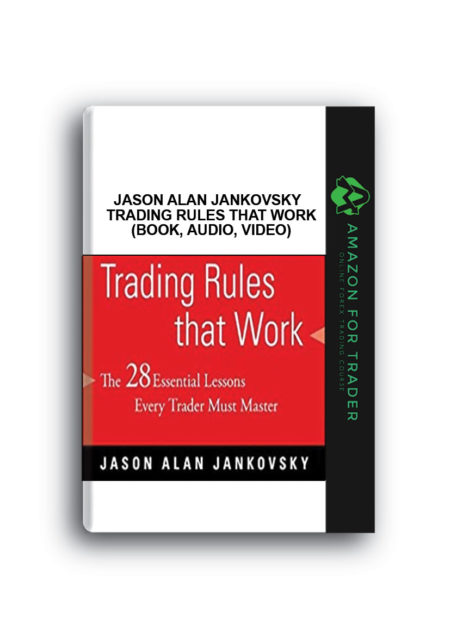 Jason Alan Jankovsky – Trading Rules that Work (Book, Audio, Video)
 Asian Efficiency – Productivity Blueprint
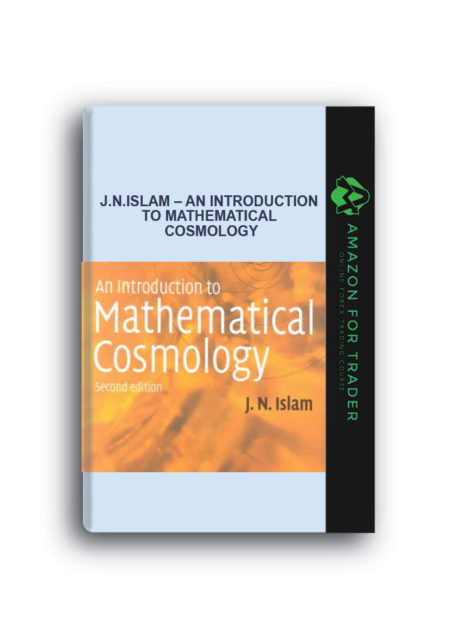 J.N.Islam – An Introduction to Mathematical Cosmology
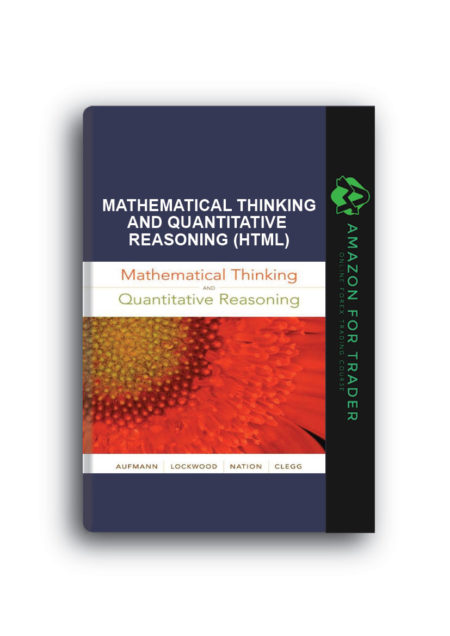 Aufman, Lockwood, Nation, Clegg – Mathematical Thinking and Quantitative Reasoning (HTML)
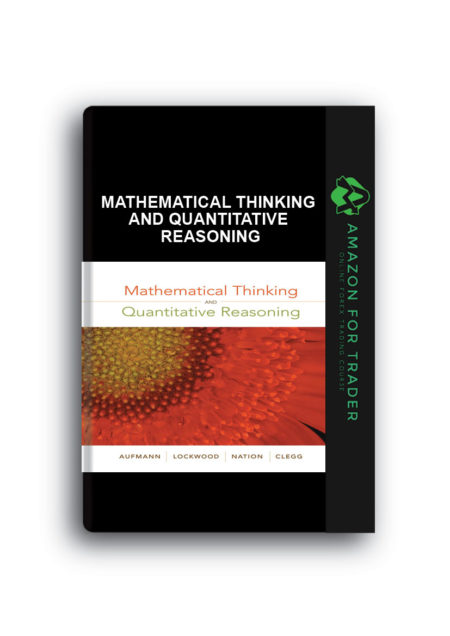 Aufman, Lockwood, Nation, Clegg – Mathematical Thinking and Quantitative Reasoning
 Tom Kendrick - The Project Management Tool Kit
 Ronald D. Smith - Strategic Planning for Public Relations
 Jon Mac – Store Formula 4 (2019)
 Raymond Merriman – The Ultimate Book on Stock Market Timing (VOL III) – Geocosmic Correlations to Trading Cycles
 David Bach - Automatic Millionaire (Audio Book)
 Robert Miles – How to Build Wealth Like Warren Buffett
 Jack Schwager – A Complete Guide to the Futures Markets
 Larry Williams – Long-Term Secrets to Short-Term Trading
 Arnold Cornez - The Offshore Money Book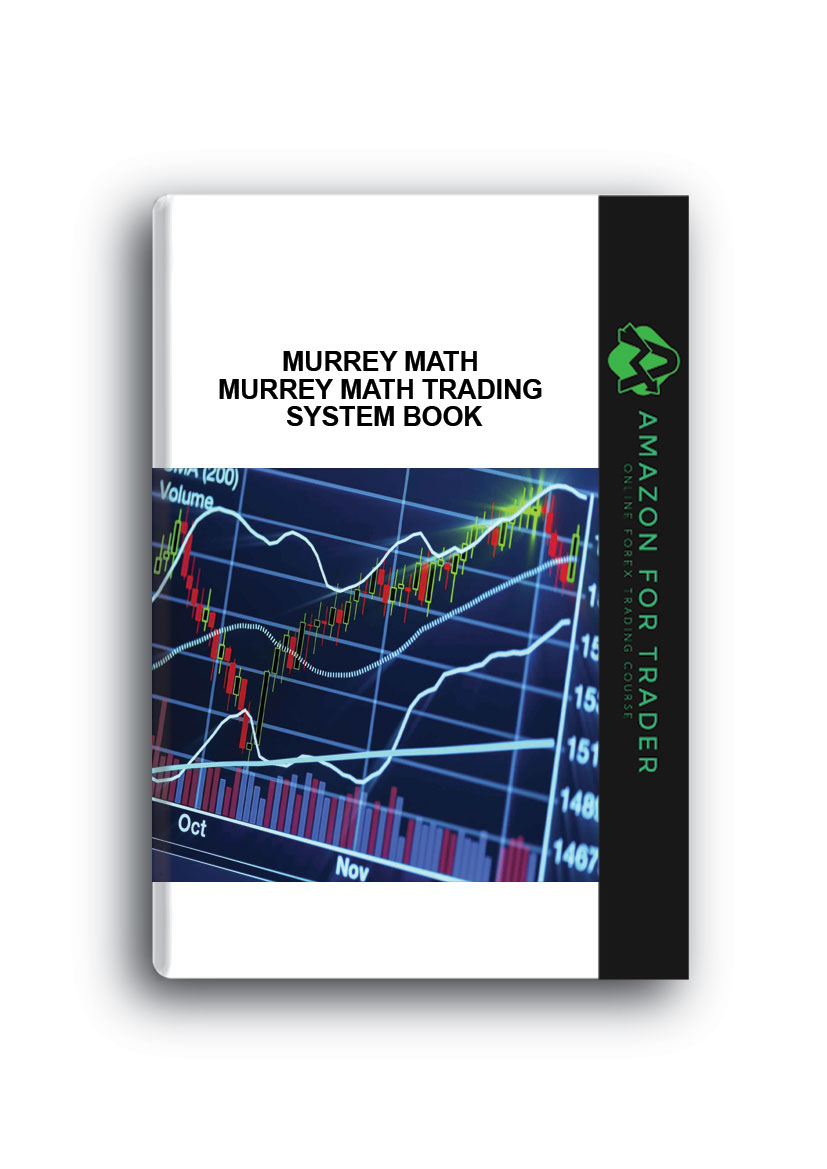
Description
Murrey Math – Murrey Math Trading System Book

- Henning Murrey from Nashville Tennessee was born in 1942. In 1993 Murrey worked on theories of random thinking, importantly by NOT studying the market. From this he wrote his trading book and then in 1995 Murrey? rediscovered? what Gann hinted at in his book, the six clues. Murrey translated the algorithms of a Fractal inside a Cube set to the Base Ten to exact Fibonacci Ratios set to the scale of Music.
The main assumption in Murrey Math is that all markets behave in the same manner akin to a herd. This agrees with our concept of reflexability, that the market in a constant state of flux or perpetual chaos. As such the market is seeking to find equilibrium, which is the point of extreme chaos, (i.e. Tops and bottoms or inflexion points). These are also the points of extreme market behavior, and why we place so much value on sentiment indicators. What we found was that The Murrey Math trading system is primarily based upon the observations made by W.D. Gann in the first half of the 20?th century. While Gann was purported to be a brilliant trader in any market his techniques have been regarded as complex and difficult to implement. The great contribution of Murrey Math (T. H. Murrey) was the creation of a system of geometry that can be used to describe market price movements in time. This geometry facilitates the use of Gann’s trading techniques. Significantly it added the turning point methodology that eluded us in refining Fibonacci levels. The Murrey Math Trading system works totally in harmony with our Gann Fans and Angles.
MM Line Interpretation
Murrey Math is a trading system for all equities. This includes stocks, bonds, futures (index, commodities, and currencies), and options. The main assumption in Murrey Math is that all markets behave in the same manner (i.e. all markets are traded by a mob and hence have similar characteristics.). The Murrey Math trading system is primarily based upon the observations made by W.D. Gann in the first half of the 20th century. While Gann was purported to be a brilliant trader in any market his techniques have been regarded as complex and difficult to implement. The great contribution of Murrey Math (T. H. Murrey) was the creation of a system of geometry that can be used to describe market price movements in time. This geometry facilitates the use of Gann’s trading techniques.
The Murrey Math trading system is composed of two main components; the geometry used to gauge the price movements of a given market and a set of rules that are based upon Gann and Japanese candlestick formations. The Murrey Math system is not a crystal ball, but when implemented properly, it can have predictive capabilities. Because the Murrey Math rules are tied to the Murrey Math geometry, a trader can expect certain pre-defined behaviors in price movement. By recognizing these behaviors, a trader has greatly improved odds of being on the correct side of a trade. The overriding principle of the Murrey Math trading system is to recognize the trend of a market, trade with the trend, and exit the trade quickly with a profit (since trends are fleeting). In short, “No one ever went broke taking a profit”.
The Murrey Math geometry mentioned above is “elegant in its simplicity”. Murrey describes it by saying, “This is a perfect mathematical fractal trading system”. An understanding of the concept of a fractal is important in understanding the foundation of Murrey Math. For readers interested in knowing more about fractals I would recommend the first 100 pages of the book,”The Science of Fractal Images” edited by Heinz-Otto Peitgen and Dietmar Saupe. The book was published by Springer-Verlag, copyright 1988. An in depth understanding of fractals requires more than “8’th grade math”, but an in depth understanding is not necessary (just looking at the diagrams can be useful).
The size (scale) of basic geometric shapes are characterized by one or two parameters. The scale of a circle is specified by its diameter, the scale of a square is given by the length of one of its sides, and the scale of a triangle is specified by the length of its three sides. In contrast, a fractal is a self similar shape that is independent of scale or scaling. Fractals are often constructed by repeating a process recursively over and over.
The next question, of course is, “What does a fractal have to do with trading in equity markets?” Imagine if someone presented you with a collection of price-time charts of many different equities and indices from many different markets. Each of these charts has been drawn using different time scales. Some are intraday, some are daily, and some are weekly. None of these charts, however, is labeled. Without labels, could you or anyone else distinguish a daily chart of the Dow from a weekly chart of IBM, or from an intraday chart of wheat prices. Not very likely. All of these charts, while not identical, appear to have the same general appearance. Within a given time period the price moves some amount, then reverses direction and retraces some of its prior movement. So, no matter what price-time scales we use for our charts they all look pretty much the same (just like a fractal). The “sameness” of these various charts can be formally characterized mathematically (but this requires more that 8th grade math and is left as an exercise to the interested reader).
Murrey Math, Murrey Math Trading System Book, Download Murrey Math Trading System Book, Free Murrey Math Trading System Book, Murrey Math Trading System Book Torrent, Murrey Math Trading System Book Review, Murrey Math Trading System Book Groupbuy.

Reviews
There are no reviews yet.