

 PARKWOODCAPITALLLC – DR.DUKE – THE NO HYPE ZONE NEWSLETTER
 Aspatore Books – Inside the Minds Leading Wall Street Investors
 Christodoulos Floudas, Panos Pardalos – Encyclopedia of Optimization 2nd Ed
 Alpesh Patel Package ( Discount 20% )
 Cheng-Few Lee – Encyclopedia of Finance
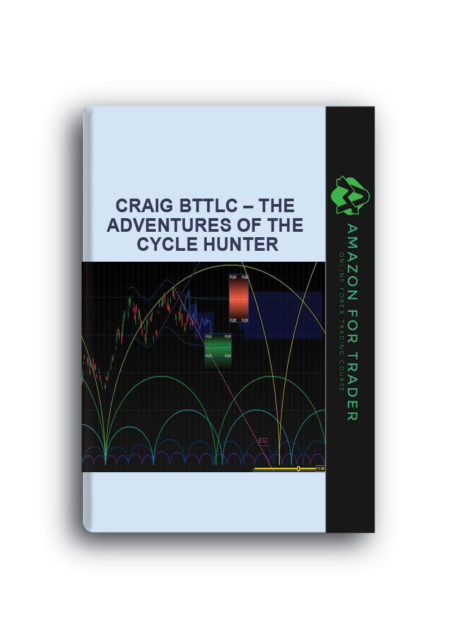 Craig Bttlc – The Adventures of the Cycle Hunter
 Craig Harris – Forex Trading Advice & Intro to The Natural Flow (craigharris-forex-education.com)
Description
Stan Erlich – Simple Cyclical Analysis
The foreign exchange market (forex, FX, or currency market) is a global decentralized market for the trading of currencies. This includes all aspects of buying, selling and exchanging currencies at current or determined prices. In terms of volume of trading, it is by far the largest market in the world.[1] The main participants in this market are the larger international banks. Financial centres around the world function as anchors of trading between a wide range of multiple types of buyers and sellers around the clock, with the exception of weekends. The foreign exchange market does not determine the relative values of different currencies, but sets the current market price of the value of one currency as demanded against another.
The foreign exchange market works through financial institutions, and it operates on several levels. Behind the scenes banks turn to a smaller number of financial firms known as “dealers,” who are actively involved in large quantities of foreign exchange trading. Most foreign exchange dealers are banks, so this behind-the-scenes market is sometimes called the “interbank market”, although a few insurance companies and other kinds of financial firms are involved. Trades between foreign exchange dealers can be very large, involving hundreds of millions of dollars. Because of the sovereignty issue when involving two currencies, forex has little (if any) supervisory entity regulating its actions.
The foreign exchange market assists international trade and investments by enabling currency conversion. For example, it permits a business in the United States to import goods from European Union member states, especially Eurozone members, and pay Euros, even though its income is in United States dollars. It also supports direct speculation and evaluation relative to the value of currencies, and the carry trade, speculation based on the interest rate differential between two currencies.[2]
In a typical foreign exchange transaction, a party purchases some quantity of one currency by paying with some quantity of another currency. The modern foreign exchange market began forming during the 1970s after three decades of government restrictions on foreign exchange transactions (the Bretton Woods system of monetary management established the rules for commercial and financial relations among the world’s major industrial states after World War II), when countries gradually switched to floating exchange rates from the previous exchange rate regime, which remained fixed as per the Bretton Woods system.
The foreign exchange market is unique because of the following characteristics:
- its huge trading volume representing the largest asset class in the world leading to highliquidity;
- its geographical dispersion;
- its continuous operation: 24 hours a day except weekends, i.e., trading from 22:00GMT on Sunday (Sydney) until 22:00 GMT Friday (New York);
- the variety of factors that affectexchange rates;
- the low margins of relative profit compared with other markets of fixed income; and
- the use ofleverage to enhance profit and loss margins and with respect to account size.
As such, it has been referred to as the market closest to the ideal of perfect competition, notwithstanding currency intervention by central banks.
According to the Bank for International Settlements,[3] the preliminary global results from the 2013 Triennial Central Bank Survey of Foreign Exchange and OTC Derivatives Markets Activity show that trading in foreign exchange markets averaged $5.3 trillion per day in April 2013. This is up from $4.0 trillion in April 2010 and $3.3 trillion in April 2007. Foreign exchange swaps were the most actively traded instruments in April 2013, at $2.2 trillion per day, followed by spot trading at $2.0 trillion. According to the Bank for International Settlements,[4] as of April 2010, average daily turnover in global foreign exchange markets is estimated at $3.98 trillion, a growth of approximately 20% over the $3.21 trillion daily volume as of April 2007. Some firms specializing on foreign exchange market had put the average daily turnover in excess of US$4 trillion.[5] The $3.98 trillion break-down is as follows:
- $1.490 trillion inspot transactions
- $475 billion inoutright forwards
- $1.765 trillion inforeign exchange swaps
- $43 billioncurrency swaps
- $207 billion inoptions and other products
Stan Erlich, Simple Cyclical Analysis, Download Simple Cyclical Analysis, Free Simple Cyclical Analysis, Simple Cyclical Analysis Torrent, Simple Cyclical Analysis Review, Simple Cyclical Analysis Groupbuy.


Reviews
There are no reviews yet.