

 ICHIMOKU CLOUD TRADING COURSE - FOLLOWMETRADES
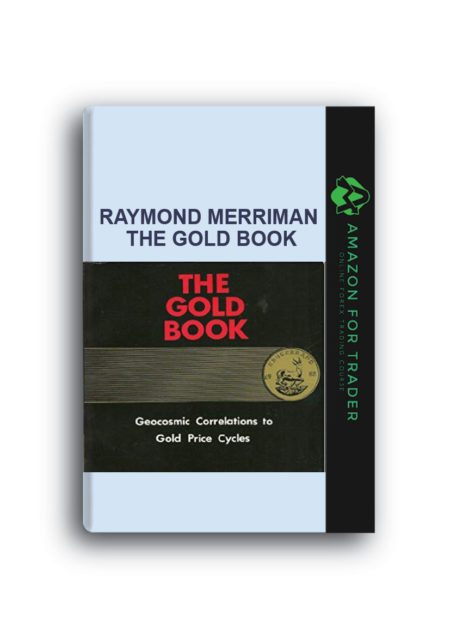 Raymond Merriman – The Gold Book
 South Western College Publishing - Principles of Macroeconomics
 Sam Jacobs – Ecom Uprise 2.0
 Jack Schwager – A Complete Guide to the Futures Markets
 JUSTIN SARDI – VIDEO ADS MASTERCLASS 2018
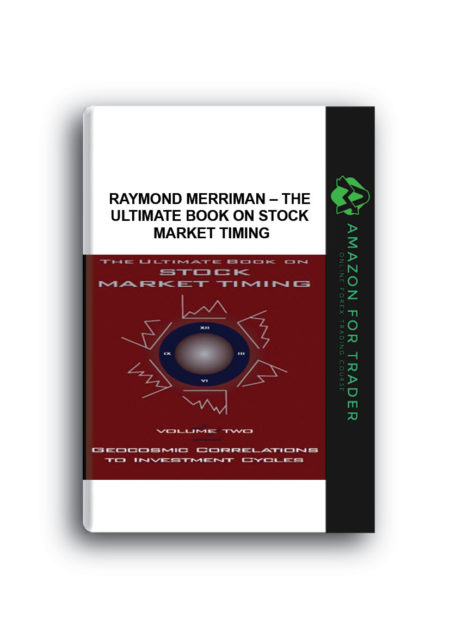 Raymond Merriman – The Ultimate Book on Stock Market Timing (VOL II) – Geocosmic Correlations to Investment Cycles
 Reiclub - Bill Bronchik – Step by Step Guide to Land Trust
 Theotrade - Duration Iron Condors Class: An Income Strategy for All Markets with Don Kaufman
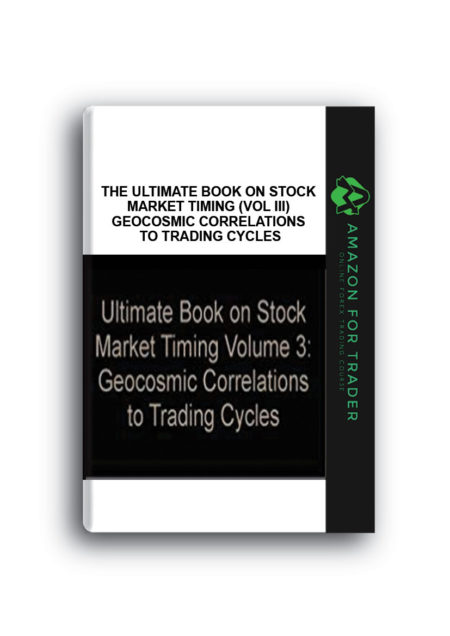 Raymond Merriman – The Ultimate Book on Stock Market Timing (VOL III) – Geocosmic Correlations to Trading Cycles
 Karin Knorr Cetina – The Sociology of Financial Markets
 Gerald A.Benjamin – Angel Capital
 Currency College Training Videos
 Fred Moore - Finance for Non-Financial Professionals (CareerTrack) (Video & Workbook 1.80 GB)
 ACADEMY - TRADING COURSES BUNDLE
 Dandrew Media – Commercial Real Estate Land Development Financier
 Angeltraders - Angel Traders Forex Strategy Course
 Craig Bttlc – The Adventures of the Cycle Hunter
 Ronald R.Hocking – Methods and Applications of Linear Models
 Dan Briody - The Iron Triangle. Inside The Secret World of the Carlyle Group
 Raymond Merriman Articles – Basic Principles Of Geocosmic Studies
 Peter J.Rousseeuw – Robust Regression and Outlier Detection
 Hendrik S.Houthakker – The Economics of Financial Markets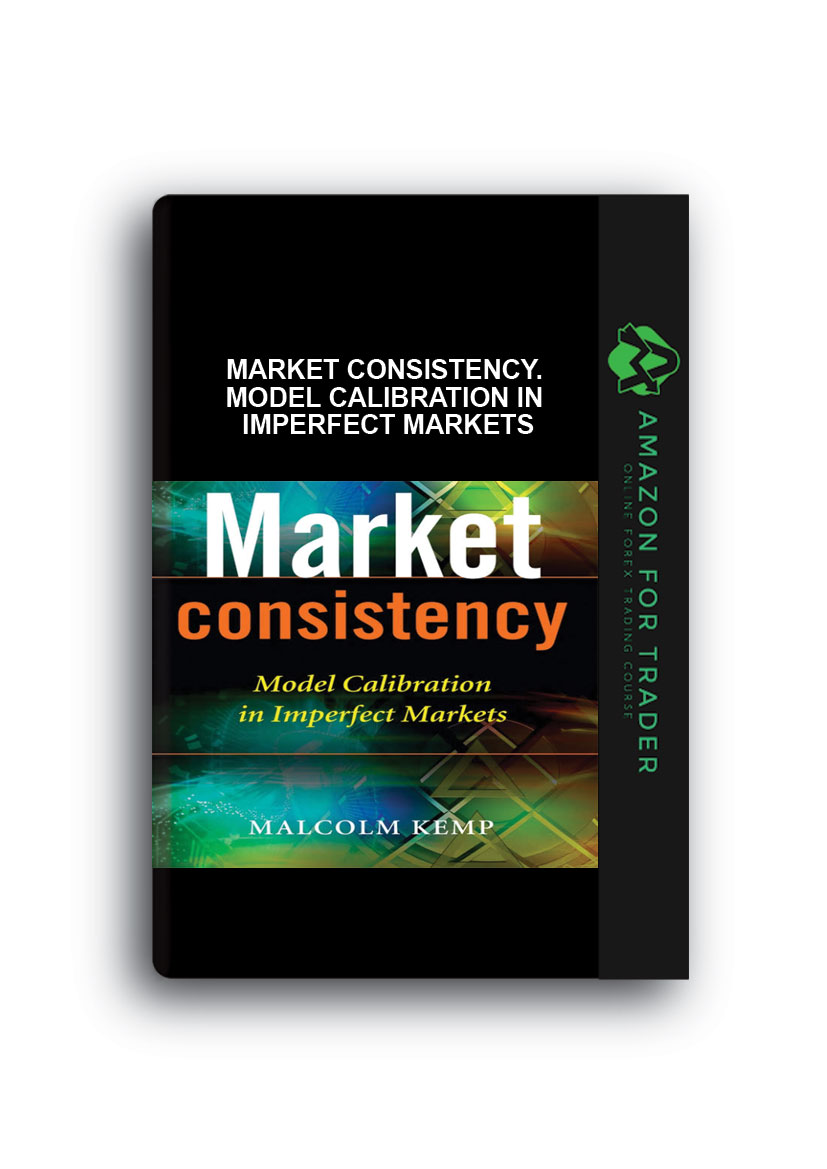
Description
Malcolm Kemp – Market Consistency. Model Calibration in Imperfect Markets

Description
Achieving market consistency can be challenging, even for the most established finance practitioners. In Market Consistency: Model Calibration in Imperfect Markets, leading expert Malcolm Kemp shows readers how they can best incorporate market consistency across all disciplines. Building on the author’s experience as a practitioner, writer and speaker on the topic, the book explores how risk management and related disciplines might develop as fair valuation principles become more entrenched in finance and regulatory practice.
This is the only text that clearly illustrates how to calibrate risk, pricing and portfolio construction models to a market consistent level, carefully explaining in a logical sequence when and how market consistency should be used, what it means for different financial disciplines and how it can be achieved for both liquid and illiquid positions. It explains why market consistency is intrinsically difficult to achieve with certainty in some types of activities, including computation of hedging parameters, and provides solutions to even the most complex problems.
The book also shows how to best mark-to-market illiquid assets and liabilities and to incorporate these valuations into solvency and other types of financial analysis; it indicates how to define and identify risk-free interest rates, even when the creditworthiness of governments is no longer undoubted; and it explores when practitioners should focus most on market consistency and when their clients or employers might have less desire for such an emphasis.
Finally, the book analyses the intrinsic role of regulation and risk management within different parts of the financial services industry, identifying how and why market consistency is key to these topics, and highlights why ideal regulatory solvency approaches for long term investors like insurers and pension funds may not be the same as for other financial market participants such as banks and asset managers.
Table of Contents
Preface.
Acknowledgements.
Abbreviations.
Notation.
1 Introduction.
1.1 Market consistency.
1.2 The primacy of the ‘market.
1.3 Calibrating to the ‘market’.
1.4 Structure of the book.
1.5 Terminology.
2 When is and when isn’t Market Consistency Appropriate?
2.1 Introduction.
2.2 Drawing lessons from the characteristics of money itself.
2.3 Regulatory drivers favouring market consistent valuations.
2.4 Underlying theoretical attractions of market consistent valuations.
2.5 Reasons why some people reject market consistency.
2.6 Market making versus position-taking.
2.7 Contracts that include discretionary elements.
2.8 Valuation and regulation.
2.9 Marking-to-market versus marking-to-model.
2.10 Rational behaviour?
3 Different Meanings given to ‘Market Consistent Valuations’.
3.1 Introduction.
3.2 The underlying purpose of a valuation.
3.3 The importance of the ‘marginal’ trade.
3.4 Different definitions used by different standards setters.
3.5 Interpretations used by other commentators.
4 Derivative Pricing Theory.
4.1 Introduction.
4.2 The principle of no arbitrage.
4.3 Lattices, martingales and Îto calculus.
4.4 Calibration of pricing algorithms.
4.5 Jumps, stochastic volatility and market frictions.
4.6 Equity, commodity and currency derivatives.
4.7 Interest rate derivatives.
4.8 Credit derivatives.
4.9 Volatility derivatives.
4.10 Hybrid instruments.
4.11 Monte Carlo techniques.
4.12 Weighted Monte Carlo and analytical analogues.
4.13 Further comments on calibration.
5 The Risk-free Rate.
5.1 Introduction.
5.2 What do we mean by ‘risk-free’?
5.3 Choosing between possible meanings of ‘risk-free’.
6 Liquidity Theory.
6.1 Introduction.
6.2 Market experience.
6.3 Lessons to draw from market experience.
6.4 General principles.
6.5 Exactly what is liquidity?
6.6 Liquidity of pooled funds.
6.7 Losing control.
7 Risk Measurement Theory.
7.1 Introduction.
7.2 Instrument-specific risk measures.
7.3 Portfolio risk measures.
7.4 Time series-based risk models.
7.5 Inherent data limitations applicable to time series-based risk models.
7.6 Credit risk modelling.
7.7 Risk attribution.
7.8 Stress testing.
8 Capital Adequacy.
8.1 Introduction.
8.2 Financial stability.
8.3 Banking.
8.4 Insurance.
8.5 Pension funds.
8.6 Different types of capital.
9 Calibrating Risk Statistics to Perceived ‘Real World’ Distributions.
9.1 Introduction.
9.2 Referring to market values.
9.3 Backtesting.
9.4 Fitting observed distributional forms.
9.5 Fat-tailed behaviour in individual return series.
9.6 Fat-tailed behaviour in multiple return series.
10 Calibrating Risk Statistics to ‘Market Implied’ Distributions.
10.1 Introduction.
10.2 Market implied risk modelling.
10.3 Fully market consistent risk measurement in practice.
11 Avoiding Undue Pro-cyclicality in Regulatory Frameworks.
11.1 Introduction.
11.2 The 2007-09 credit crisis.
11.3 Underwriting of failures.
11.4 Possible pro-cyclicality in regulatory frameworks.
11.5 Re-expressing capital adequacy in a market consistent framework.
11.6 Discount rates.
11.7 Pro-cyclicality in Solvency II.
11.8 Incentive arrangements.
11.9 Systemic impacts of pension fund valuations.
11.10 Sovereign default risk.
12 Portfolio Construction.
12.1 Introduction.
12.2 Risk-return optimisation.
12.3 Other portfolio construction styles.
12.4 Risk budgeting.
12.5 Reverse optimisation and implied view analysis.
12.6 Calibrating portfolio construction techniques to the market.
12.7 Catering better for non-normality in return distributions.
12.8 Robust optimisation.
12.9 Taking due account other investors’ risk preferences.
13 Calibrating Valuations to the Market.
13.1 Introduction.
13.2 Price formation and price discovery.
13.3 Market consistent asset valuations.
13.4 Market consistent liability valuations.
13.5 Market consistent embedded values.
13.6 Solvency add-ons.
13.7 Defined benefit pension liabilities.
13.8 Unit pricing.
14 The Final Word.
14.1 Conclusions.
14.2 Market consistent principles.
Bibliography.
Index.
Author Information
Malcolm Kemp is a well known actuary and expert in risk and quantitative finance, with over 25 years’ experience in the financial services industry. From 1996 to 2009 he was Head of Quantitative Research at a leading UK investment management business and before that was a partner in an actuarial consultancy. He is currently Managing Director of Nematrian Limited.
Malcolm Kemp, Market Consistency. Model Calibration in Imperfect Markets, Download Market Consistency. Model Calibration in Imperfect Markets, Free Market Consistency. Model Calibration in Imperfect Markets, Market Consistency. Model Calibration in Imperfect Markets Torrent, Market Consistency. Model Calibration in Imperfect Markets Review, Market Consistency. Model Calibration in Imperfect Markets Groupbuy.

Reviews
There are no reviews yet.